Cognitive Stimulation for Older Adults: Exercises and Memory
13/10/2026
Care Home or Home Nursing? How to Choose for an Older Relative
20/10/2026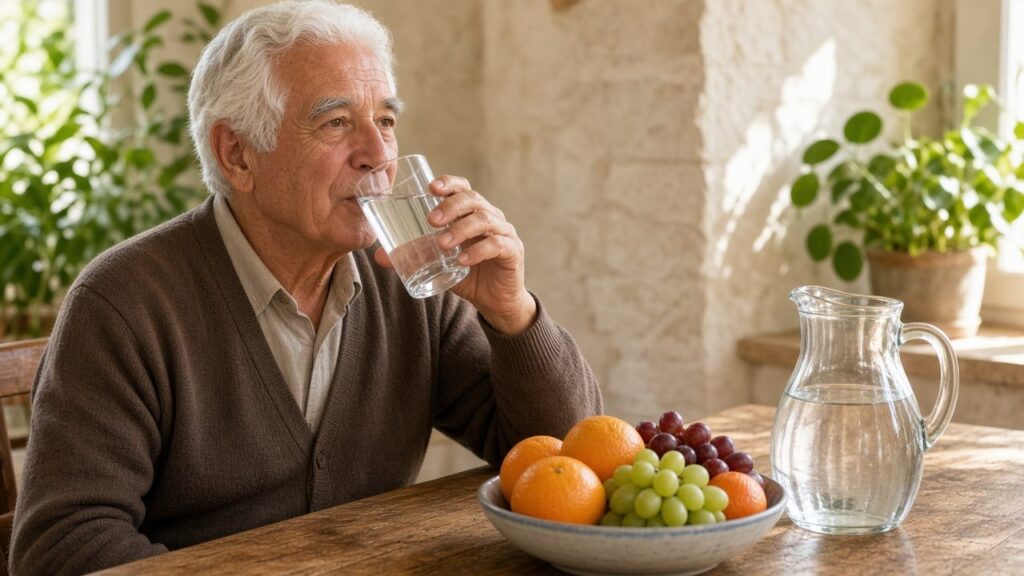
Dehydration in older adults is common, and it can affect health and quality of life quickly. With age, the body holds less water and the sense of thirst grows weaker. The kidneys also lose some of their ability to save water. As a result, a hot day, a fever or a stomach bug can tip an older person into dehydration within hours. The good news is that early signs are easy to spot once you know them. This guide explains the risks, simple prevention at home and when to seek urgent help.
Why dehydration in older adults is so common
Water supports every process in the body. It carries nutrients, removes waste and controls body temperature. As we age, the total amount of water in the body falls, which leaves little margin for error. At the same time, the brain’s thirst signal becomes weaker. Many older people simply do not feel thirsty, even when they need fluids.
Other factors make the problem worse:
- fear of incontinence, which leads some people to drink less on purpose.
- fever, diarrhoea or vomiting.
- medicines such as diuretics, laxatives and some psychiatric drugs.
- dementia, which makes it harder to drink without reminders.
- hot weather and infections, which increase fluid needs.
The National Institute on Aging highlights the extra risk for older people during heatwaves.
What good hydration protects
- Clear thinking: enough fluid helps concentration and lowers the risk of confusion, which can sometimes look like dementia.
- Heart and circulation: good hydration supports blood flow and avoids extra strain on the heart.
- Kidneys: the kidneys filter better with enough water, which lowers the risk of some urinary infections and stones.
- Steadiness: dehydration can cause dizziness and low blood pressure on standing. Good hydration is one of several steps that help reduce the risk of falls.
Early signs to watch for
The NHS lists the main early signs of dehydration. In older people, look out for:
- a dry mouth, lips or eyes.
- dark yellow urine or passing urine less often.
- mild dizziness, tiredness or headache.
- new confusion or unusual sleepiness.
Who is most at risk and how doctors assess it
Each older person needs an individual assessment by their doctor. The doctor reviews medicines, recent illness, daily fluid intake and any heart or kidney problems. Blood tests check kidney function and electrolytes such as sodium and potassium.
For people with heart failure or kidney disease, the doctor sets the right amount of fluid. Drinking too much is not harmless for them. For everyone else, the doctor can draw up a simple plan with specific amounts of water, herbal teas and water-rich foods. Carers then learn to spot the early warning signs.
Practical tips to prevent dehydration in older adults at home
Small, frequent drinks work better than one large bottle that stays untouched. These ideas help:
- keep a small glass of water or another drink within reach all day.
- offer water-rich foods such as fruit, yoghurt, soup and jelly, if the diet allows.
- use a simple drinks diary or check urine colour. Pale yellow is the aim, unless medicines or vitamins change the colour.
- try warm tea or a favourite drink if your relative refuses plain water.
- use reminders from a watch or an app, but keep watching in person too.
Our guides to nutrition for older adults and fall prevention at home offer more practical advice.
When dehydration becomes an emergency
Seek medical help at once if you notice confusion, difficulty standing, very dark or very little urine, a very dry mouth, a fast heartbeat or unusual drowsiness. Fever together with any of these signs also needs urgent care. A doctor decides whether a drip is necessary. It is not a first step at home for every case.
Show the doctor an up-to-date list of medicines, especially if diuretics, laxatives or new blood pressure drugs have started recently. During a heatwave or a stomach bug, fluid needs rise. The plan still has to suit people with heart or kidney disease.
Frequently asked questions
How much fluid does an older person need each day?
European clinical nutrition guidelines suggest about 1.6 litres a day for women and 2.0 litres for men, including fluid from food. The doctor adjusts this for health, medicines and weather, and may limit it in heart or kidney failure.
Why do older people often not feel thirsty?
The thirst signal weakens with age. The brain sends the message later, so the body may already need water before the person notices.
What are the first signs of dehydration in older adults?
Early signs include a dry mouth, dark urine, mild dizziness, tiredness and headache. Spotting them early helps prevent more serious problems.
How can carers help?
Carers can offer small drinks often, serve water-rich foods and keep track of how much their relative drinks each day.
For personal advice about your relative, please contact us and we will get back to you.