Parkinson’s Disease and Deep Brain Stimulation
08/08/2026
Monoclonal Antibodies: New Treatments for Alzheimer’s
05/09/2026
Elderly care is one of the most important decisions any family has to make. As daily needs grow, relatives face a major dilemma: is it better for their loved one to stay at home or to move into a modern care home?
According to the World Health Organization (WHO), maintaining functional ability and social connection is the key to healthy ageing. That is why you should weigh up the benefits and risks of each option objectively.
When does elderly care at home work well?
Staying at home is the natural first choice for most families. In particular, the older person feels safe in their familiar surroundings.
They also keep their daily habits without any change of environment. This offers emotional calm, especially in the early years of later life.
However, home support runs into serious obstacles when the older person gradually loses their independence:
- Risk of falls: To begin with, ordinary homes do not have grab rails or safe, non-slip floors.
- Social isolation: The older person also spends many hours alone in front of the television.
- Lack of medical cover: In addition, a home helper cannot deal with emergencies.
- Family burnout: Ultimately, relatives take on an excessive emotional and physical burden.
When does elderly care call for a modern care home?
Modern facilities now operate as centres for active living and rehabilitation. In this setting, proper elderly care provides 24-hour safety, medical monitoring and dignity.
At the same time, a care home offers a full range of support services:
- Medical supervision: First, doctors continuously check vital signs and make sure medication is given correctly.
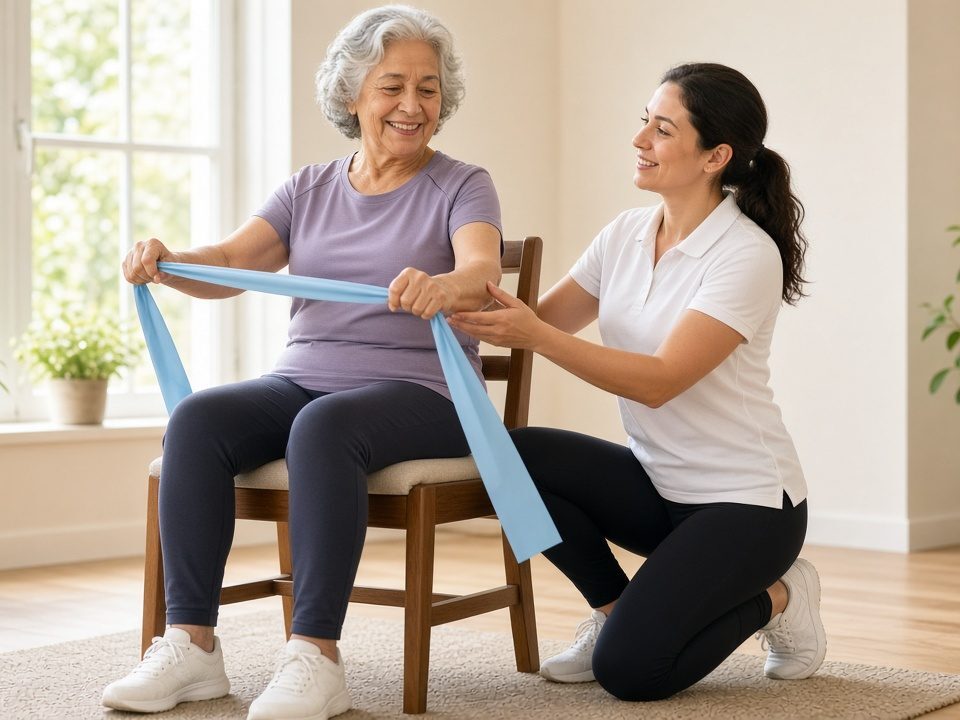
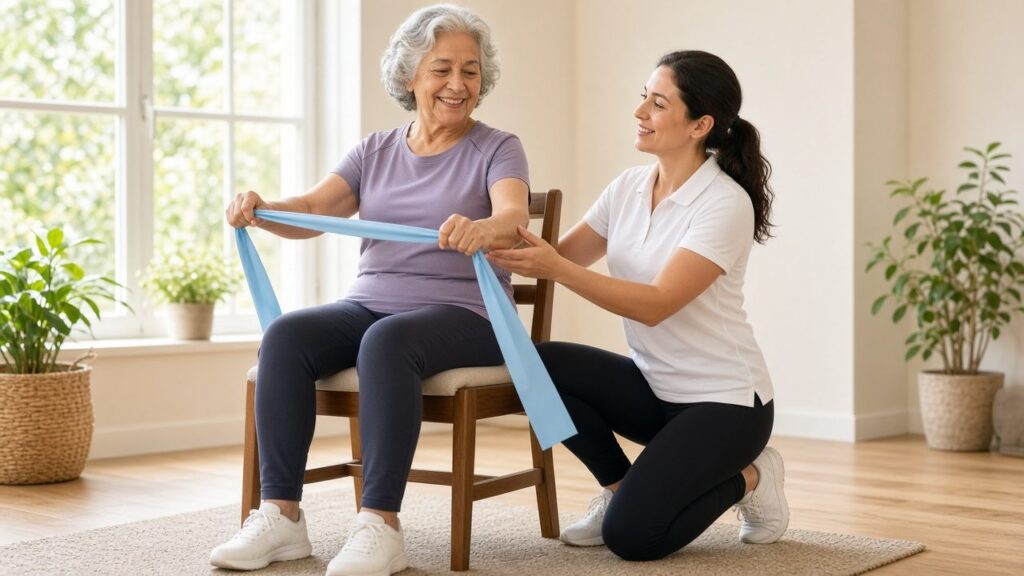
- Daily mobilisation: Second, physiotherapists work every day to strengthen walking and balance.
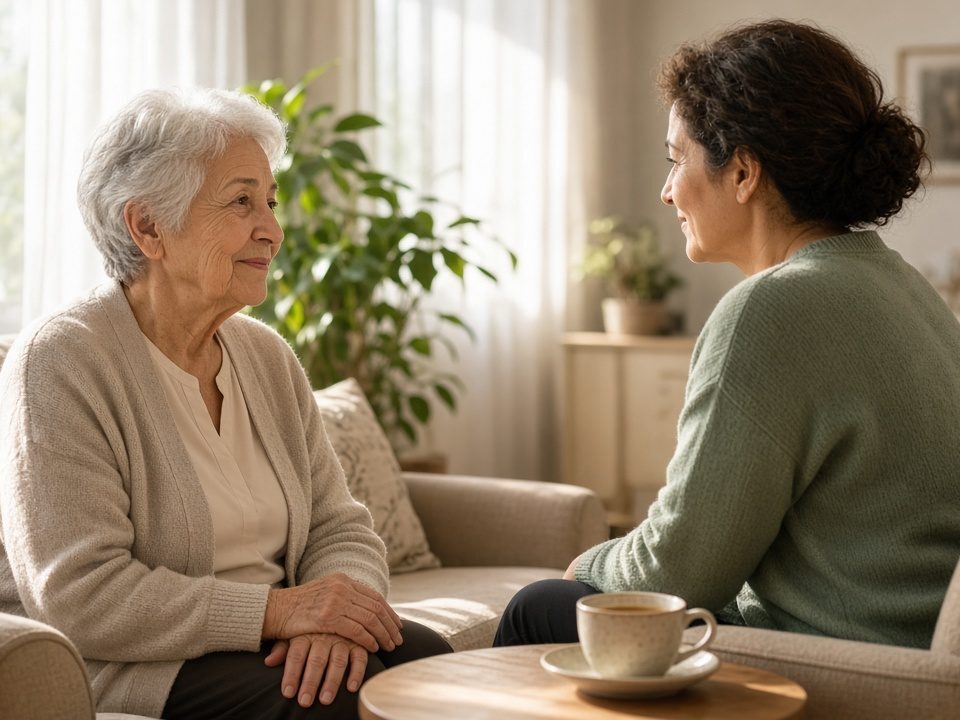
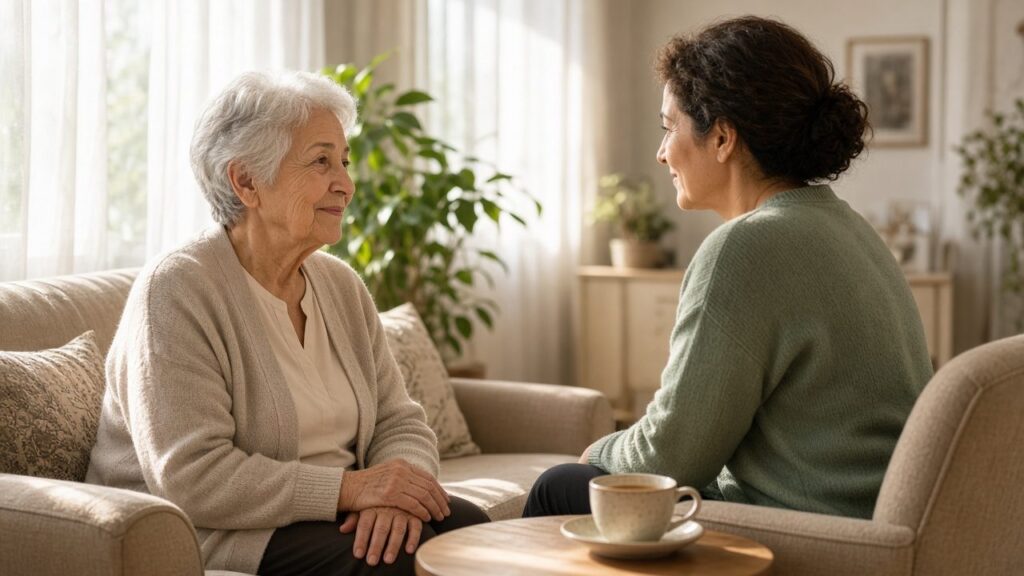
- Social life: In addition, residents take part in group activities with people of their own age.
- Safe facilities: Specially designed spaces also effectively prevent accidents.
- Special diets: Finally, the kitchen prepares complete meals based on each resident’s needs.
Comparison: Elderly care at home or in a care home?
To make the best decision, it is worth comparing the two options in a few key areas:
- Level of safety: At home, the risk of an accident remains high. A care home, by contrast, has emergency call equipment and round-the-clock supervision.
- Rehabilitation: At home, the family constantly has to look for outside therapists. A care home, by contrast, offers daily physiotherapy.
- Real cost: 24-hour cover at home often requires two carers and frequent medical visits. As a result, the final cost often exceeds a monthly stay in a care home.
- Family well-being: Choosing a care facility relieves the children of constant worry. This way, they can enjoy meaningful, quality time with their parent.
Criteria for choosing elderly care
Moving into a modern facility is the best solution when you notice certain signs:
- Mobility problems: In particular, when you notice frequent falls or marked unsteadiness when walking.
- Cognitive decline: Also, when there is a diagnosis of dementia, confusion or a tendency to wander.
- Chronic conditions: In addition, conditions such as Parkinson’s disease that require ongoing mobility support.
- Increased needs: Likewise, when the older person needs specialised personal care or help with eating.
So if you notice two or more of the signs above, elderly care in a suitable facility offers far greater safety.
Frequently Asked Questions
How long does it take to settle into a care home?
Older people usually need two to three weeks to get used to their new environment. Regular visits from relatives and having their personal belongings around them make the transition much smoother.
Can the stay be temporary?
Of course. Many families choose a short-term stay for recovery after surgery or a fracture. This way, the patient fully regains their strength before returning home.
How does a care home ensure quality of life?
The staff provide constant companionship, good nutrition, medical safety and creative daily activities. As a result, residents stay lively and sociable.
Personalised support for the family
Choosing the right solution does not have to be something you do alone. Our experienced team actively supports you and carefully assesses the needs of your loved one.
You can also explore our residential services and the medical monitoring services of our care home in detail.
Looking for guidance for your loved one?
Contact us to arrange a meeting and a tour of our facilities →