Balance Sheet for the financial year 2018
29/07/2019
Elderly Care at Home or in a Care Home? A Decision Guide
03/09/2026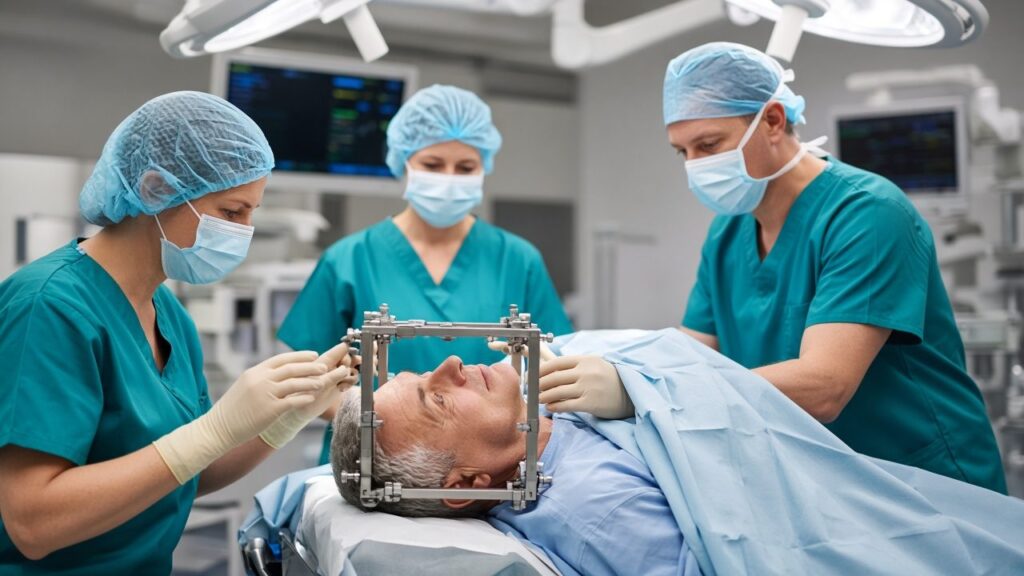
Dealing with a chronic movement disorder often causes great concern for the family. In particular, deep brain stimulation (DBS) is today an established surgical method for Parkinson’s disease. This innovative treatment offers significant relief when medication is no longer enough. It also helps patients regain control of their body safely.
In the early stages, levodopa medicines deliver excellent results for everyday movement. Over the years, however, patients often develop marked motor fluctuations and troublesome dyskinesias (involuntary movements). For this reason, specialist neurologists recommend advanced treatment options to stabilise mobility. Accurate information therefore gives new hope for a more independent future.
How does deep brain stimulation work?
This neurosurgical procedure involves placing extremely thin electrodes in specific areas of the brain. Surgeons usually target the subthalamic nucleus or the globus pallidus internus. These brain areas precisely regulate the smooth execution of every human movement.
The surgeon then connects the electrodes, under the skin, to a small neurostimulator. The doctor usually places this compact device near the collarbone, just like a cardiac pacemaker. The stimulator sends continuous electrical pulses to the motor centres of the brain. In this way, the device counteracts the abnormal signals that cause the severe symptoms.
According to detailed information from the internationally respected Mayo Clinic, the method does not destroy brain tissue. On the contrary, it is a fully reversible and adjustable intervention. In addition, doctors can change the device’s settings wirelessly at any time.
Which patients are suitable for the treatment?
Choosing suitable candidates requires a detailed assessment by a specialist team of neurologists and neurosurgeons. Specialists certainly do not recommend the procedure for every stage or form of the disease. In particular, doctors carefully review the person’s medical history and general health.
The main requirements for the procedure include:
- Disease history: A diagnosis of idiopathic Parkinson’s disease for at least four to five years.
- Response to levodopa: A clear improvement in movement after taking the appropriate medication.
- Marked fluctuations: Unpredictable “off” episodes of immobility and severe involuntary movements.
- Treatment-resistant tremor: Persistent tremor that does not respond adequately to standard medication.
- Good cognitive health: No severe dementia or active psychiatric disorders.
The ideal candidates are therefore in good general health with satisfactory cognitive function. They also need to have realistic expectations about the results after surgery. With the right guidance, the medical team properly prepares the patient for every stage of the process.
Clinical benefits and everyday improvement
The results of the treatment bring a dramatic change in the patient’s way of life. As a result, the patient regains the ability to carry out daily tasks on their own. For example, getting dressed or eating no longer has to be a daily struggle.
Deep brain stimulation also offers several advantages for motor function:
- Tremor control: A significant reduction of tremor in the arms and legs.
- Less rigidity: Greater freedom of movement and easier rising from a chair.
- Improved slowness of movement: Faster initiation of walking and steadier steps.
- Less medication: Daily doses can be reduced by up to half.
This reduction in medication significantly limits side effects and dyskinesias. The patient also enjoys more hours of stable mobility during the day. This way, the patient is freed from the constant worry of sudden “freezing” episodes.
The importance of specialised rehabilitation
Surgically implanting the device is the start of a wider treatment journey. Soon after the operation, a period of personalised programming of the stimulator settings begins. In particular, the treating neurologist fine-tunes the electrical stimulation together with the new medication doses.
At the same time, the patient needs regular physiotherapy to regain a correct posture. In this context, comprehensive medical monitoring ensures safe exercise and helps prevent falls. Continuous nursing support also brings peace of mind to the whole family.
In many cases, a temporary or permanent stay in an organised care facility makes recovery much easier. Health professionals make sure the medication is taken correctly and encourage the older person every day. If you would like responsible guidance for your loved one, contact us so that we can arrange the right care.
Frequently Asked Questions
Is deep brain stimulation safe?
Yes, international clinical studies have reported a very good safety record for the method for decades. Modern neuronavigation systems also keep the risk of complications to a minimum. Patients recover smoothly under close medical supervision.
Does the method cure Parkinson’s disease for good?
No, the procedure does not stop the underlying degeneration of nerve cells. However, it effectively controls the motor symptoms and offers a high quality of life for many years. It is therefore a complementary rather than a curative treatment.
How long does the neurostimulator battery last?
Battery life depends on the type of device and the strength of the stimulation. Standard batteries last three to five years before the doctor replaces them in a short procedure under local anaesthesia. Rechargeable devices, by contrast, can work for more than fifteen years.
When does the doctor programme the system?
The neurologist usually carries out the first programming a few weeks after discharge from hospital. This allows the initial post-operative swelling around the electrodes to settle completely. The specialist can then achieve the ideal settings with maximum precision.
Can the doctor remove the device if necessary?
Yes, the treatment is fully reversible and does not leave permanent damage to the brain. The treating doctor can switch off or remove the system at any time. The patient therefore always stays in full control of their situation.